
Spouted Pouch Filling for Cooking Oils
A spouted pouch can offer a practical refill format with a distinctive shelf presence. Beneficial Blends reviews flexible pack filling around the formula, film structure, fitment, cap, and handling requirements of the actual package.
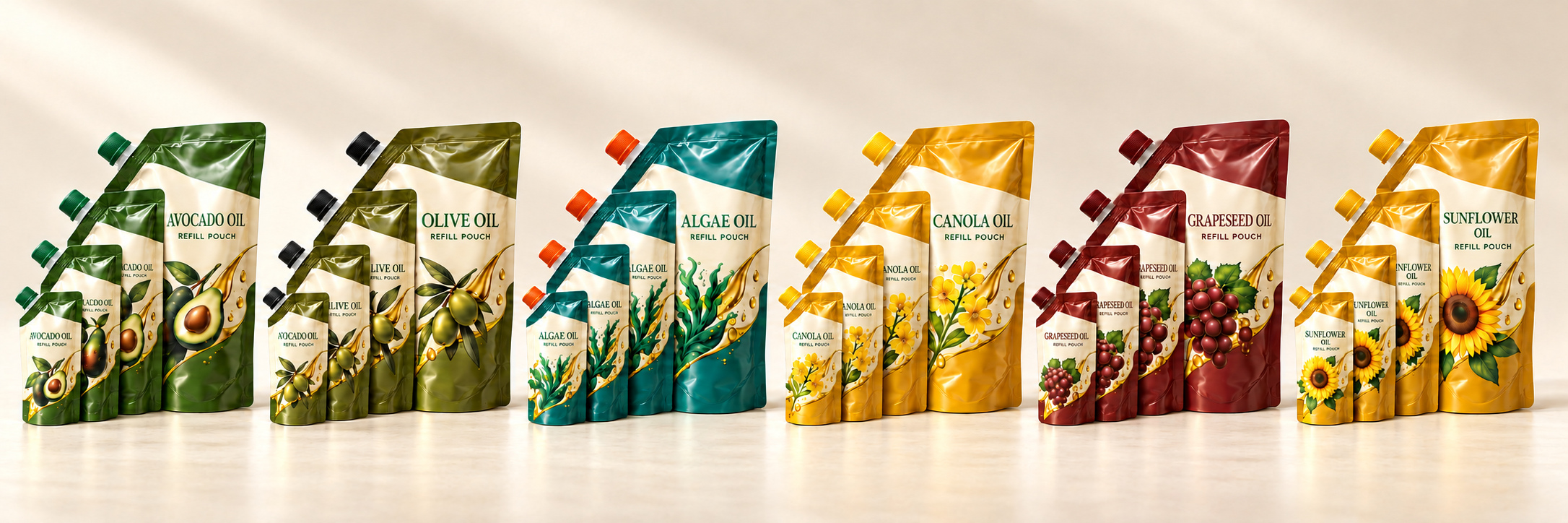
Explore these pouch sizes and oils for your program. Availability depends on your product, pouch, fitment and production requirements.
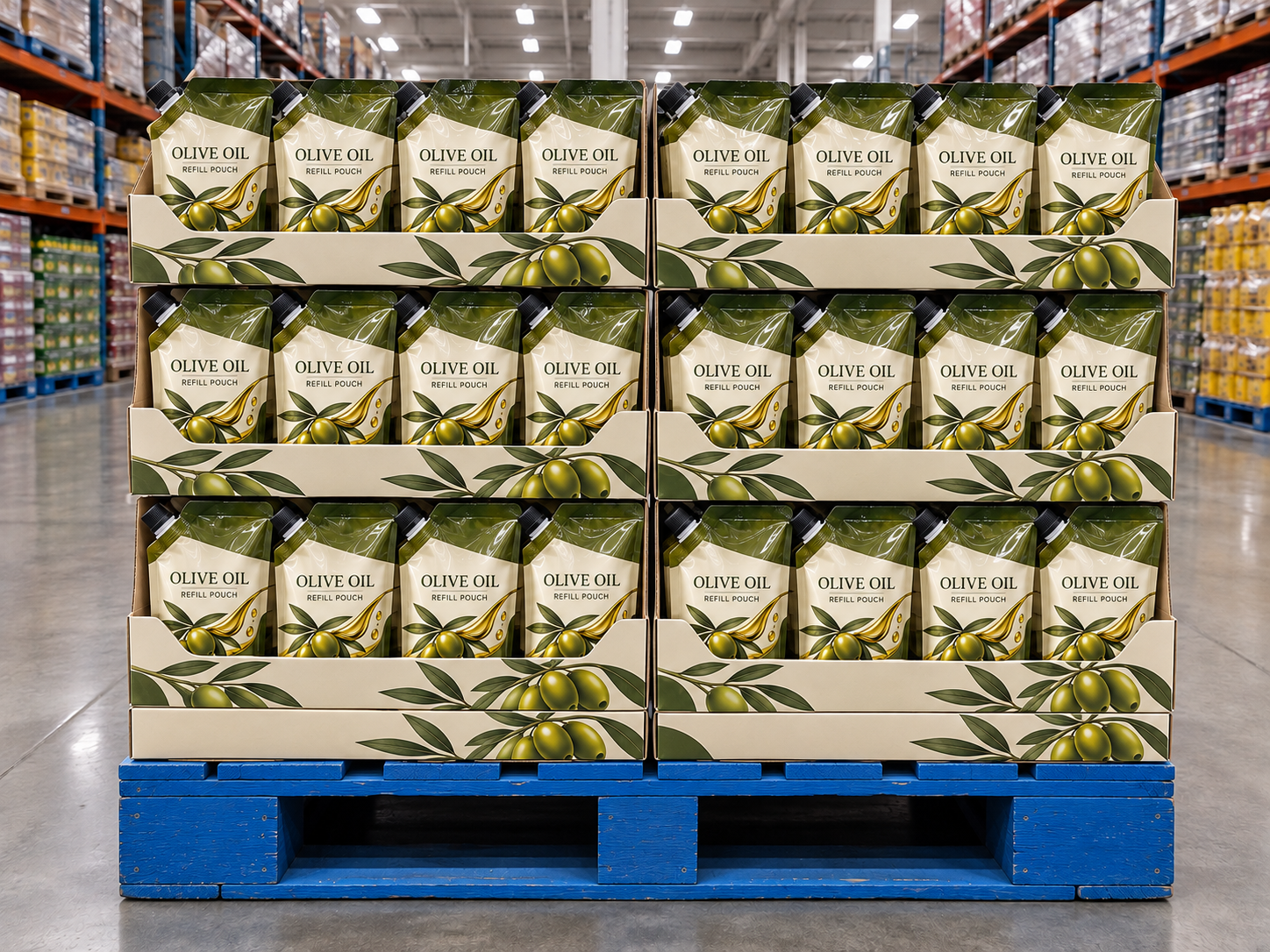
Olive oil refill pouches in a club-store pallet display. Discuss 32 oz pouch and display configurations for your program.
Precision Spouted Pouch Filling for Cooking Oils
From a premium refill for home cooks to a club-store multipack, a successful oil pouch needs to work on the shelf, on the filling line and in the hands of the customer. Beneficial Blends helps brands evaluate the product, pouch and production plan together so a promising packaging concept can become a practical commercial program.
Whether you are moving an established oil out of a bottle or developing a new private label offering, bring us your specifications and growth plans. We can discuss filling, packaging and the steps needed to prepare for a larger launch.
Why consider a cooking oil refill pouch?
Flexible packaging can create opportunities for brands looking for a distinctive, convenient refill. The right choice depends on the complete package and how it will be used.
- Retail: A stand-up pouch gives shoppers a convenient way to refill a dispenser while offering room for brand messaging and usage instructions.
- Foodservice: A manageable pouch and well-designed spout can make dispensing easier in a busy kitchen; empty flexible packaging can also take up less space than rigid containers.
- Club stores: Multipacks and larger formats can create a compelling value proposition when the pack is designed for the intended display and pallet configuration.
- E-commerce: Flexible packs still need an appropriate shipper and transit evaluation. The pouch, closure and case must work together to protect the order.
Material use, recyclability and environmental impact vary by package and distribution system. We encourage brands to substantiate any sustainability claims for their specific pouch.
Oil types, sizes and applications
Discuss spouted pouch programs for olive, avocado, algae, canola, grapeseed and sunflower oils, as well as other cooking oils and blends. Our illustrated lineup includes 8, 16, 24 and 32 fl oz concepts. Available sizes, materials and fitments depend on the product and production requirements.
Retail refills
Retail pouches from approximately 250 mL to 1 L can support grocery and online refill programs. We consider shelf presentation, dispensing, finished dimensions and case configuration alongside the fill requirements.
Club packs and foodservice
Brands considering larger pouches, including 1.5 to 3 L for club applications or 3 to 10 L and above for foodservice, should share their desired dimensions and samples early. We will review whether the specific format, handling and volume are suitable for the available equipment.
Engineering a dependable oil pouch
Film compatibility and protection
The oil and flexible film remain in contact throughout the product’s shelf life. Film selection should account for food-contact suitability, compatibility with the formulation, seal integrity and the desired oxygen and light barrier. Structures and performance differ, so review supplier specifications and appropriate testing before making shelf-life or barrier claims.
Spouts, caps and filling support
Spout location, neck dimensions, thread design and cap specifications affect how a pouch can be filled and closed. A flexible pouch also changes shape as it fills, making support and positioning important. We review the fitment and filled package with your team to identify the right approach to handling, closure application and keeping product away from critical sealing areas.
Case fit and distribution
A filled pouch should be assessed in its shipping case, not just on its own. Case dimensions, void space, orientation, stacking and the distribution channel can affect movement and stress on seals and spouts. We can discuss case-fit reviews and appropriate transit testing with your packaging partners; test requirements and responsibility should be agreed for each project.
Capacity for a growing program
From launch planning to a larger retail or foodservice opportunity, production scheduling starts with a realistic forecast. Tell us your expected order quantities, annual volume and timing. Ask our team about the planned spouted pouch capacity expansion, its timing and how it may support your program.
From specifications to production
- Review the project: Share the oil specification, target fill size, pouch drawings, fitment and closure details, estimated volume and sales channel.
- Evaluate compatibility: Review film and closure specifications, dispensing needs and packaging supplier recommendations for your formula.
- Plan trials: Agree on any needed samples, line trials and package or distribution testing before committing to production.
- Check artwork and case presentation: Review filled samples for legibility, barcode placement, appearance and fit in the intended shipping or display case.
- Prepare for production: Confirm approved specifications, quality requirements, materials and scheduling with the team.
Complete your retail-ready program
Filling is only one step. Depending on your project, discuss variety pack assembly, shrink bundling and multipacks, club-store presentation and lot coding and traceability. Combining complementary services can help simplify handoffs as your program grows.
Frequently asked questions
Can an existing oil formula move from a bottle to a pouch?
Many liquid oils are candidates for flexible packaging. The film, spout, closure, fill process and distribution conditions still need to be reviewed for the specific formula and package.
What certifications apply to my project?
Ask our team for current certification documents and the scope relevant to your product. Organic or kosher claims also depend on the approved ingredients, product and production arrangements.
How do you manage oil around the closure?
Clean closure surfaces are an important part of a sound packaging process. Pouch support, nozzle selection and filling settings should be evaluated with the chosen spout and oil; requirements are confirmed during project review and any agreed trials.
What is the minimum order quantity?
Minimums depend on the oil, pouch and fitment, materials and production scope. Share your expected run size and annual forecast so we can discuss a practical quote.
Let’s plan your spouted pouch filling project
Bring us your pouch drawings or samples, spout and cap details, oil specifications, target sizes and forecast. Whether you are exploring your first refill or preparing for a larger rollout, our team can help you identify the next steps.