
Food Safety & Quality: Define the Controls for Your Project
A successful food run depends on more than the equipment that fills the bottle. Ingredient identity, approved specifications, handling controls, packaging checks, and release decisions all contribute to consistent finished goods.
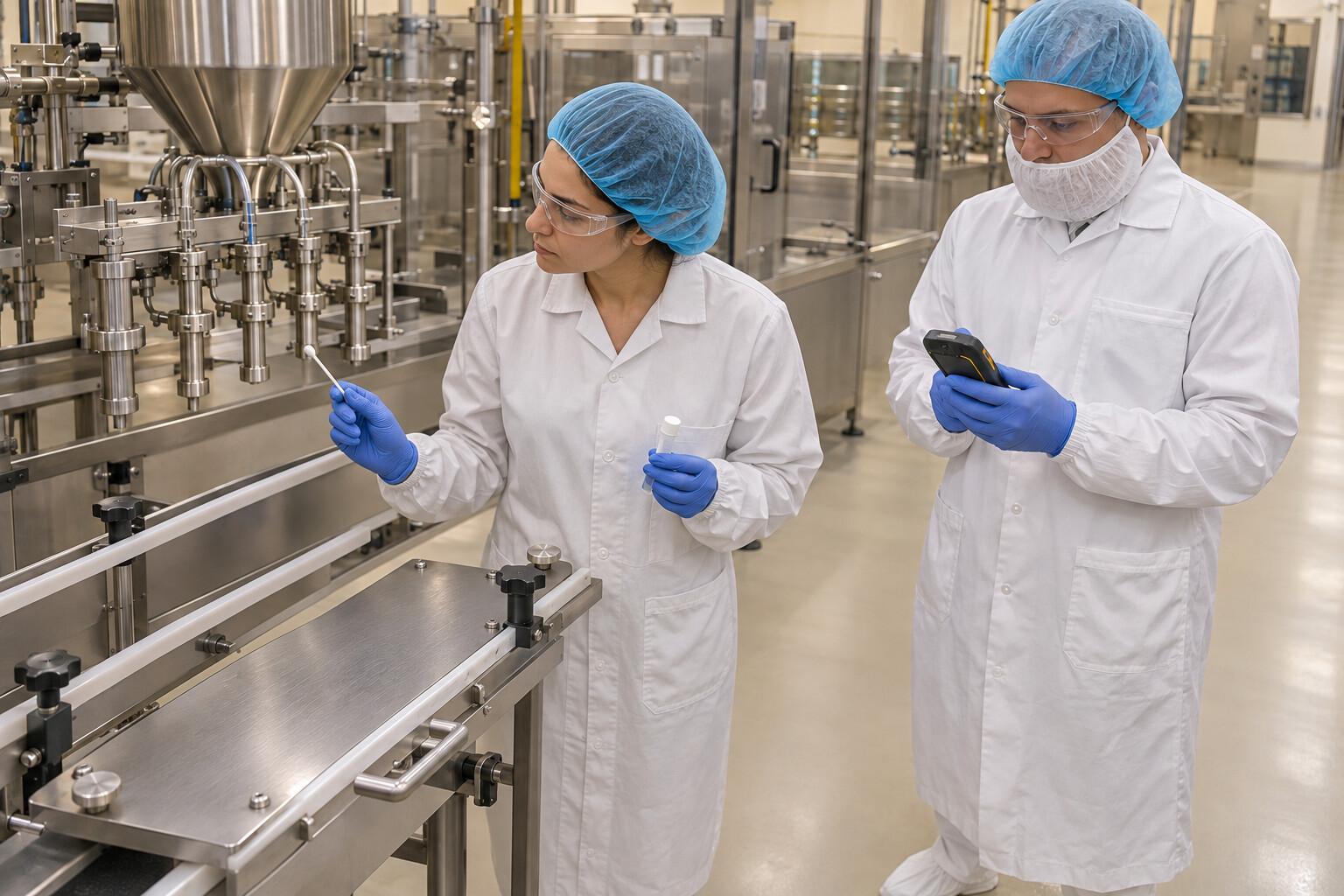
Clean equipment, controlled handling, documented checks
Food safety connects personnel hygiene, material handling, sanitation and production controls. Appropriate protective clothing, complete hair and beard coverage where needed, clean gloves and controlled footwear support the hygiene practices for the work area. PPE complements cleaning and handling controls; it does not establish sterile or cleanroom manufacturing.
The product-specific sanitation review considers contact surfaces, changeovers, cleaning chemistry and verification needed before use. Visual inspection, general hygiene checks and hazard-specific methods answer different questions. The applicable written program determines the methods and acceptance criteria.
Connect standards with production
Approved specifications bring together material identity, handling, fill targets, closure integrity, correct labels and legible lot codes. Deviations need assessment and an authorized disposition before affected material is accepted.
Connect the quality plan to the commercial commitment
Retailer requirements, label claims, and storage conditions should be understood before production is scheduled. We discuss how those expectations translate into the agreed manufacturing scope and records. That makes quality part of planning the order, rather than a collection of documents requested at the end.
Translate requirements into controls
For a food project, identify ingredient risks, allergens, required processing, sanitation needs and storage conditions. A cosmetic or other specialty liquid program may require different specifications and records. Avoid assuming that one certificate or testing plan covers all categories.
Make review and disposition explicit
Define incoming checks, in process observations, finished product criteria and who can approve release. Specify how deviations and material changes are handled. The useful question is not simply whether a supplier has a quality system, but how the relevant controls apply to your product.
Questions buyers ask
How can our quality team evaluate project fit?
Request current scope documents and share your product specification, required process and supplier questionnaire. Agree which records can be provided and identify any requirements that need further review.
Explore related services
Let’s plan your next step
Share your product specifications, customer requirements, packaging, and any supplier approval checklist.
Discuss quality requirements for your food program
Documented credentials for your next production program
Beneficial Blends is an FDA registered and inspected facility. Our current records include separate SQF Food Safety and SQF Quality certificates, Ecocert organic handling certification, product-specific kosher and Non-GMO documentation, and Florida cosmetic and OTC manufacturer licenses.
Request a Quote
Tell us about your product, packaging, quantities and timing. Complete the form below to request a quote from Beneficial Blends.
Having trouble viewing the form? Open the quote form in a new tab.


